Floor Repair Services in Portland, Augusta & Naples, ME
Floor repair services in
Portland, Augusta & Naples, ME involve a structured interior restoration process that addresses surface damage, structural inconsistencies, material separation, and subfloor instability across a variety of flooring systems. Sloan Flooring performs floor repair work using measured diagnostic methods and controlled repair sequencing designed to restore stability and alignment in residential flooring. Each repair project begins with identifying the underlying cause of flooring issues before any surface correction or replacement work is carried out.
Damage Assessment and Floor Condition Diagnosis
Floor repair begins with a detailed inspection of the affected flooring area to determine the type, extent, and source of damage.
Surface Damage Identification
Visible wear and structural defects are mapped across the floor surface to determine repair scope.
Scratch and Abrasion Analysis
Surface-level damage is reviewed to determine whether refinishing, patching, or board replacement is required.
Cracking and Separation Detection
Areas where flooring materials have separated or cracked are marked for targeted repair intervention.
Structural Movement Evaluation
Floors are checked for movement or instability that may indicate deeper subfloor issues.
Flex and Bounce Testing
Sections of flooring are tested for movement under load to identify weak structural support areas.
Joint Displacement Review
Gaps between boards, tiles, or planks are assessed to determine alignment disruption.
Subfloor Inspection and Stabilization Work
Many flooring issues originate from subfloor problems, making structural evaluation a critical part of repair work.
Subfloor Integrity Assessment
The base structure beneath the flooring is examined for damage or instability.
Moisture Impact Evaluation
Moisture exposure is checked as a potential cause of warping, swelling, or adhesive failure.
Material Degradation Check
Wood rot, concrete erosion, or adhesive breakdown is identified where applicable.
Subfloor Reinforcement Process
Once issues are identified, stabilization work is performed to restore a solid foundation.
Structural Support Repair
Weak sections are reinforced to restore load-bearing capacity.
Level Correction Application
Uneven areas are corrected to ensure a stable surface for flooring reinstatement.
Hardwood Floor Repair Techniques
Hardwood flooring repair focuses on restoring damaged planks, correcting surface imperfections, and stabilizing loose sections.
Board Replacement and Section Repair
Damaged boards are carefully removed and replaced with matching materials.
Controlled Removal Process
Affected planks are extracted without disturbing surrounding flooring sections.
Replacement Board Integration
New boards are fitted to match existing alignment and grain direction.
Surface Restoration Work
Minor damage is corrected through sanding and localized refinishing.
Scratch Blending Technique
Surface imperfections are blended into surrounding wood texture.
Finish Matching Application
Protective coatings are applied to match existing floor sheen and color.
Vinyl and Laminate Floor Repair Methods
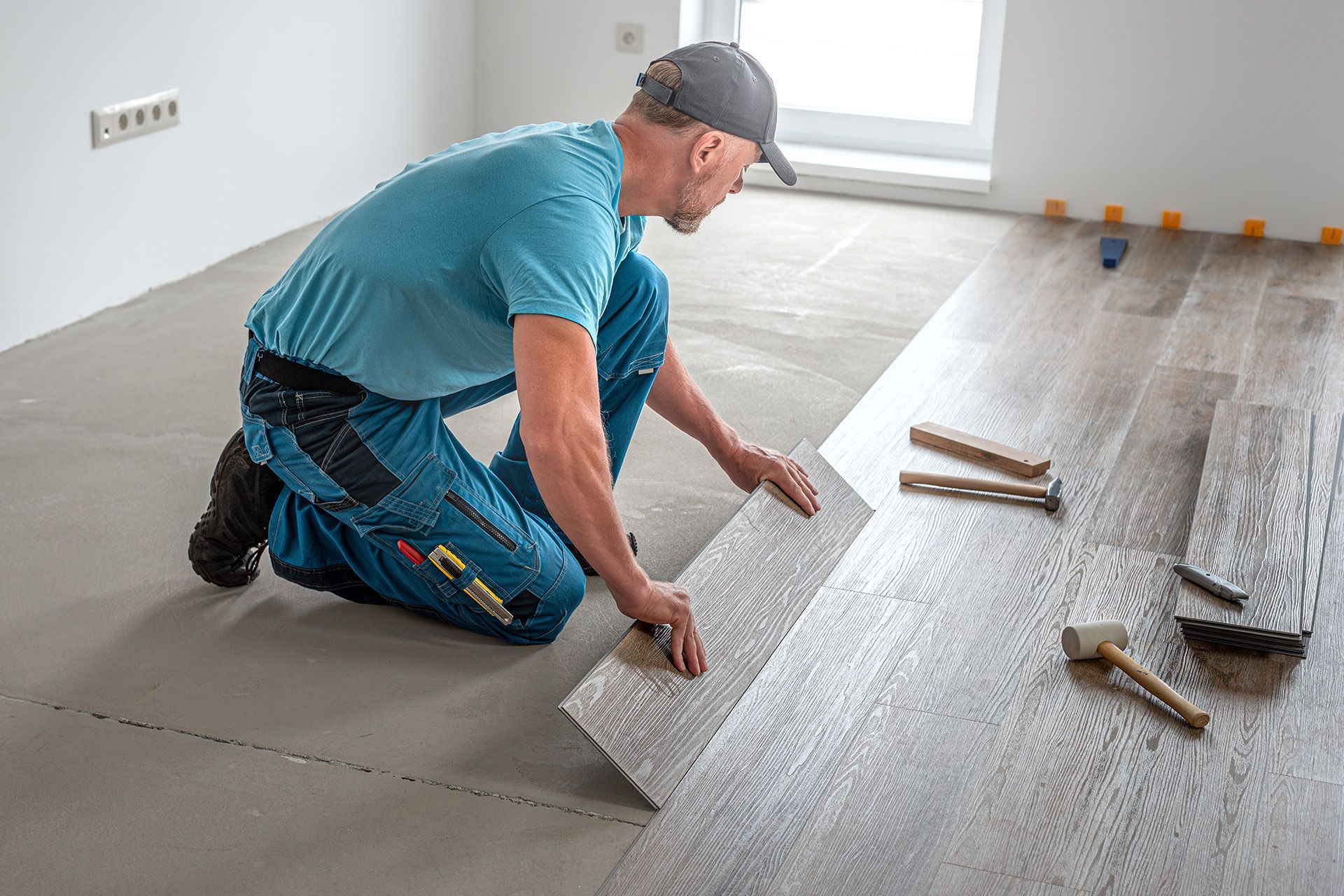
Vinyl and laminate flooring repairs focus on plank replacement, seam correction, and surface re-locking systems.
Click-Lock System Repairs
Interlocking flooring systems are repaired by removing and replacing damaged planks.
Seam Unlocking Process
Affected planks are carefully disengaged from surrounding boards.
Replacement Alignment Installation
New planks are installed with precise seam matching for visual continuity.
Surface Rebonding and Stabilization
Loose or lifting areas are corrected to restore surface stability.
Adhesion Reinforcement Application
Problem areas are secured to prevent future lifting or shifting.
Edge Realignment Adjustment
Perimeter edges are corrected to restore clean transitions.
Tile and Stone Floor Repair Procedures
Tile and natural stone repairs require precise removal, replacement, and re-grouting techniques due to rigid material structures.
Tile Removal and Replacement
Damaged tiles are carefully removed and replaced with matching units.
Controlled Breakout Technique
Surrounding tiles are protected during removal to prevent collateral damage.
New Tile Seating Process
Replacement tiles are installed into fresh mortar beds for secure bonding.
Grout Line Restoration
Damaged or discolored grout is removed and replaced to restore surface continuity.
Joint Cleaning and Refill Process
Grout lines are cleared and refilled to ensure uniform sealing.
Surface Sealing Reapplication
Sealed finishes are restored to protect repaired areas from moisture exposure.
Environmental and Residential Repair Factors in Portland, Augusta & Naples, ME
Floor repair services in
Portland, Augusta & Naples, ME are influenced by seasonal climate variation and indoor environmental conditions that can contribute to flooring damage over time.
Seasonal Moisture and Temperature Impact
Fluctuations in humidity and temperature can lead to expansion, contraction, and material separation.
Winter Drying Effects
Lower humidity levels can cause wood contraction and joint gaps.
Summer Moisture Expansion
Higher humidity may contribute to swelling or adhesive weakening in certain materials.
Residential Usage and Wear Patterns
Different household layouts and usage levels influence the type of floor damage encountered.
High-Traffic Area Degradation
Entryways and living spaces typically experience accelerated wear and surface breakdown.
Multi-Surface Transition Stress
Flooring transitions between rooms often develop separation or uneven edges over time.
Floor repair services in
Portland, Augusta & Naples, ME involve structured diagnostic evaluation, targeted material restoration, and controlled resurfacing techniques. Each repair stage is designed to restore stability, alignment, and functional performance across residential flooring systems.