Hardwood Flooring Installation in Portland, Augusta & Naples, ME
Hardwood flooring installation in and around Portland, Augusta, and Naples, ME, requires precise preparation, accurate material handling, and controlled installation methods that account for indoor humidity, subfloor conditions, and the natural behavior of wood. Sloan Flooring performs hardwood floor installation work tailored to residential interiors where structural consistency, alignment, and long-term stability are essential considerations. Each installation is approached as a layered process that begins with environmental evaluation and ends with controlled finishing and curing.
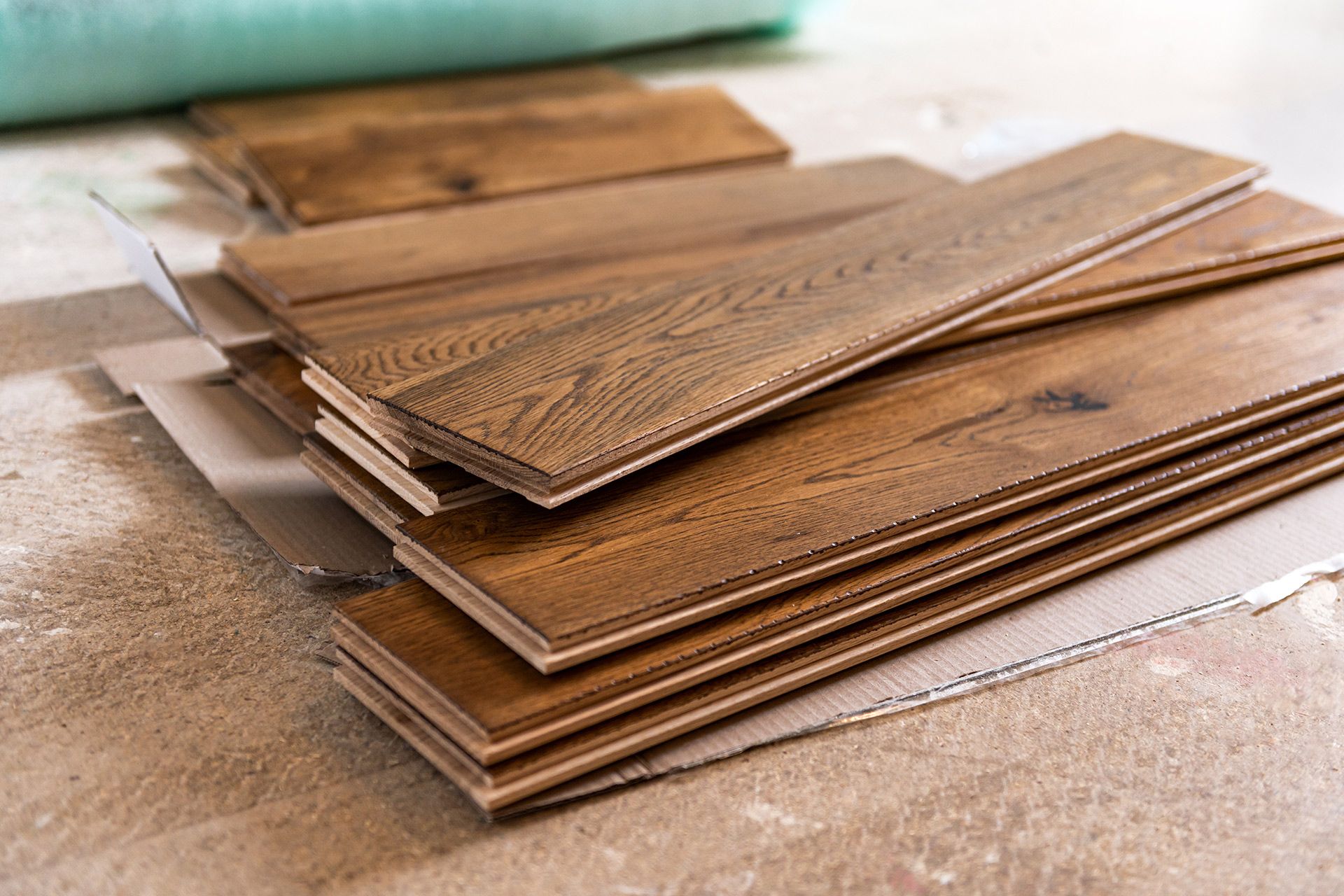
Project Overview and Installation Scope
Hardwood flooring installation involves more than laying planks across a prepared surface. It is a structured process that integrates material acclimation, subfloor readiness, and installation sequencing designed to maintain uniform expansion and contraction behavior after placement.
Site Evaluation and Measurement Mapping
Before installation begins, floor areas are measured in detail to determine plank layout direction, seam distribution, and transition points between rooms. This mapping stage ensures that hardwood boards align consistently with architectural features such as hallways, entry points, and fixed cabinetry.
Environmental Conditions Assessment
Indoor temperature and moisture levels are evaluated because hardwood responds to environmental changes. In
Portland, Augusta, and Naples, ME, seasonal humidity fluctuations require attention to expansion gaps and stabilization periods prior to installation.
Structural Readiness Confirmation
The underlying floor structure is reviewed for levelness and integrity. Any deviation in height or slope is identified early to prevent post-installation movement or uneven board alignment.
Hardwood Material Selection and Characteristics
Different hardwood species and formats behave differently during installation and long-term use. Selection is tied directly to stability, grain structure, and intended room usage rather than purely visual preference.
Solid Hardwood Composition
Solid hardwood flooring consists of single-cut timber planks. These are typically used in areas where environmental control is stable, and they require careful acclimation before installation begins.
Expansion Sensitivity Considerations
Solid boards naturally expand and contract with humidity changes, making spacing calculations and edge allowances critical during installation planning.
Engineered Hardwood Construction
Engineered hardwood is composed of layered wood with a stable core structure designed to reduce movement. This format is often used in areas with moderate environmental variation.
Layer Stability Behavior
The cross-layered structure of engineered planks helps minimize warping, allowing installation over a wider range of subfloor conditions.
Board Dimensions and Grain Orientation
Plank width and grain direction influence both installation layout and structural performance.
Wide Plank Alignment Factors
Wider boards require tighter subfloor tolerances to avoid visible height variation between edges.
Grain Flow Consistency
Grain orientation is evaluated to ensure visual continuity across rooms and transitions.
Subfloor Preparation and Structural Correction
Subfloor preparation is one of the most critical stages in hardwood flooring installation. The surface beneath the wood determines how well the floor performs over time.
Surface Leveling Procedures
Subfloors are checked for dips, ridges, and irregularities. Even minor deviations can create movement or hollow spots beneath hardwood planks.
High Spot Adjustment
Raised areas are reduced using mechanical sanding or controlled abrasion to ensure a consistent base plane.
Low Area Correction
Depressions are filled and stabilized using leveling compounds designed for wood flooring applications.
Moisture Barrier Integration
Moisture levels from the subfloor are measured and addressed to prevent upward transfer into hardwood boards.
Vapor Retardant Layer Placement
A protective layer may be installed depending on subfloor composition to reduce moisture migration.
Fastener Surface Compatibility
The subfloor is evaluated for compatibility with nails, staples, or adhesive systems depending on the selected installation method.
Installation Methods and On-Site Techniques
Hardwood flooring installation methods vary depending on material type, subfloor composition, and room layout. Each method requires controlled sequencing to maintain alignment and stability.
Nail-Down Installation Process
This method is commonly used for solid hardwood over wooden subfloors.
Board Securing Sequence
Planks are secured row by row, ensuring staggered seams that prevent continuous joint alignment across multiple rows.
Expansion Gap Management
Perimeter spacing is maintained to allow natural movement of wood after installation.
Glue-Down Installation Method
Adhesive installation is typically used for engineered hardwood or concrete subfloors.
Adhesive Distribution Control
Glue is applied in measured sections to prevent uneven curing and board shifting.
Pressure Setting Alignment
Installed planks are weighted or rolled to ensure full surface contact with the adhesive layer.
Floating Floor Installation System
Floating systems allow hardwood sections to lock together without being permanently fixed to the subfloor.
Click-Lock Joint Engagement
Boards interlock through precision-cut edge profiles that maintain alignment across the floor surface.
Underlayment Functionality
A cushioning layer is installed beneath floating floors to reduce sound transmission and surface vibration.
Finishing, Curing, and Surface Stabilization
After installation, hardwood floors require stabilization time and surface treatment depending on material type and finish system.
Surface Sanding and Smoothing
For unfinished hardwood installations, sanding is performed to create a uniform surface level across all boards.
Grain Direction Sanding Sequence
Sanding is performed along controlled directional passes to maintain wood integrity and surface consistency.
Sealant and Finish Application
Protective coatings are applied to enhance resistance to wear and moisture exposure.
Layered Coating Application
Finishes are applied in multiple controlled layers to ensure even absorption and surface durability.
Curing and Settling Period
After installation and finishing, hardwood requires time to stabilize within the indoor environment.
Temperature Stabilization Phase
Indoor climate conditions are maintained consistently during the curing process to support proper settling.
Project Workflow and Local Installation Considerations
Hardwood flooring installation in Naples, ME is influenced by seasonal climate variation, residential construction styles, and indoor heating systems.
Seasonal Humidity Adaptation
Wood flooring responds to moisture changes throughout the year, requiring installation timing that accounts for expansion behavior.
Winter Dryness Adjustment
During colder months, indoor air tends to be drier, which can affect plank spacing and contraction behavior.
Summer Moisture Expansion Planning
Increased humidity levels require careful attention to expansion gaps and board placement tolerances.
Residential Layout Integration
Homes in Naples, ME often feature mixed room layouts that require transition management between flooring zones.
Room-to-Room Continuity Planning
Floor direction and seam alignment are adjusted to maintain visual consistency across connected spaces.
Threshold Transition Handling
Transitions between hardwood and other flooring types are structured to prevent elevation mismatches and edge wear.
Hardwood flooring installation is a structured technical process that depends on precision at every stage, from subfloor evaluation to final surface stabilization. Each phase contributes to how the flooring performs under long-term residential conditions in and around
Portland, Augusta, and Naples, ME,.